Electric Vehicles · Insurance Guide
Buying an electric car and getting an insurance quote back that erases most of the fuel savings you were counting on is one of the more common frustrations UK drivers run into during their first year of EV ownership. That outcome isn't inevitable.
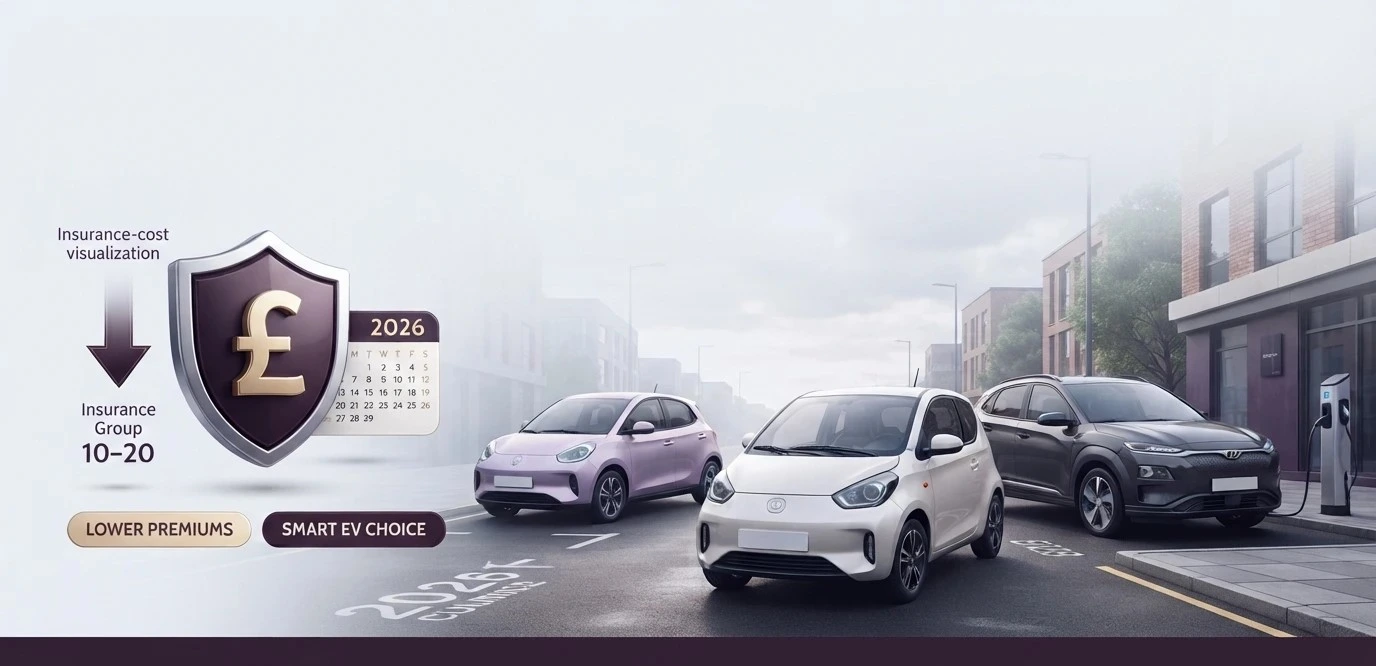
Answer: The cheapest electric cars to insure in 2026 tend to be compact city EVs and established mainstream hatchback-style models with several years of production history, thanks to lower vehicle value, modest performance figures, and mature claims data. Purchase price alone doesn't predict insurance group — battery size, repair network, safety rating, and performance figures matter just as much, so checking the specific insurance group and running a real quote before buying is the most reliable way to find genuinely affordable cover.
Buying an electric car and getting an insurance quote back that erases most of the fuel savings you were counting on is one of the more common frustrations UK drivers run into during their first year of EV ownership. The good news is that this outcome isn't inevitable. Some of the cheapest electric cars to insure in 2026 aren't necessarily the cheapest to buy, and a bit of research before you sign anything can save a genuinely significant amount over the life of the car.
This guide isn't a list of ten car names with no context, because that approach tends to go stale within months as insurance groups shift and pricing moves. Instead, it walks through which categories of electric vehicles consistently land in lower insurance brackets, why insurance groups don't always track purchase price the way people assume, and how to check real numbers for a specific car before you commit to buying it.
It's a common assumption that a lower purchase price automatically means a lower insurance premium, and while there's some truth to that at a broad level, it breaks down quickly once you look at specific models. Insurance groups are calculated using a much wider set of factors than sticker price alone, including repair cost, parts availability, performance figures, security rating, and how expensive the vehicle is to write off entirely.
This matters a great deal for electric vehicles specifically. A modestly priced EV with a large, expensive battery pack and limited independent repair options can land in a surprisingly high insurance group, while a similarly priced model built on a simpler, more widely serviced platform might sit several groups lower. Checking the insurance group directly, rather than assuming it tracks the purchase price, is the single most useful habit for anyone shopping specifically for affordable EV cover.
Small, low-powered electric city cars consistently rank among the cheapest electric cars to insure, largely because they combine a lower vehicle value with modest performance figures and simpler mechanical layouts. These cars are also popular choices for newer or younger drivers, which has pushed several manufacturers and insurers to specifically target this segment with more competitive group ratings.
A number of well-known electric hatchbacks that have now been on UK roads for several years benefit from a mature claims history, which tends to pull their insurance groups down compared to newer entrants without that track record. Familiarity matters here: insurers price with more confidence when they have years of real accident and repair data to draw on, rather than estimating risk for a brand-new model.
Electric models that have been through a few years of production, even if a newer version has since replaced them, often carry lower insurance groups than their freshly launched successors. Parts availability is well established, independent garages are more likely to be familiar with the platform, and the claims data behind them is far more complete.
Vehicles with a five-star safety rating and manufacturer-fitted tracking or immobiliser technology tend to see a meaningful reduction in premium compared to otherwise similar models without those features. For electric vehicles specifically, built-in telematics and remote tracking have become a genuine differentiator, since they can reduce both theft risk and the average cost of a claim.
The difference between a well-chosen, insurance-friendly EV and a higher-group alternative in a similar price bracket can be substantial. It's not unusual to see a gap of several hundred pounds a year between two electric vehicles that cost roughly the same to buy, purely because one sits in a noticeably higher insurance group than the other. Over a typical three-year ownership period, that gap can add up to more than a thousand pounds, which is a meaningful amount to leave on the table by not checking before you buy.
This is exactly why insurance group should be treated as a genuine purchase factor, not an afterthought you deal with once the car is already sitting on your driveway. Checking the group rating and getting a realistic quote before you commit to a specific model puts you in a much stronger position than discovering the number after the fact.
A quick way to compare real numbers across a shortlist of electric vehicles is to run each one through a dedicated car insurance calculator here, which lets you see how premiums actually differ between models before you commit to buying one.
Manufacturer marketing materials and dealership brochures rarely mention insurance group prominently, which means a lot of buyers only discover where a car sits once they request a quote after purchase. A car insurance cost calculator flips that order, letting you check a shortlist of vehicles against your own driver profile, postcode, and mileage before any money changes hands.
This step matters more for electric vehicles than it historically did for petrol cars, simply because EV insurance groups have moved around more over the past few years as claims data has matured and repair networks have expanded. A model that looked expensive to insure eighteen months ago may have dropped several groups since, and a calculator reflects current pricing rather than an outdated assumption carried over from an earlier purchase decision.
Rather than relying on a single "cheapest EVs" ranking that may not reflect your specific circumstances, a short, repeatable process tends to produce better results:
This approach takes a little more time upfront than simply picking whichever EV has the lowest advertised price, but it consistently produces a more accurate picture of what a car will actually cost you to run day to day.
Generally, choosing a lower insurance group doesn't mean settling for a worse car, particularly within the compact and mainstream hatchback categories where the cheapest-to-insure options are also some of the most popular and well-reviewed EVs on the market. Where trade-offs do show up is mainly around range and performance, since smaller battery packs that keep insurance groups lower also tend to mean a shorter range between charges, and modest acceleration figures that keep insurance groups down also mean a less brisk driving experience.
For most everyday driving, particularly shorter commutes and mixed urban and motorway use, these trade-offs are rarely a dealbreaker. It's really only drivers with a genuine need for long-range motorway capability or strong performance who are likely to find themselves pushed toward a higher insurance bracket regardless of how carefully they shop.
The cheapest electric cars to insure in 2026 tend to share a few common traits: modest battery size, established production history, strong safety and security ratings, and a wide network of qualified repair garages. None of these factors are visible from the purchase price alone, which is exactly why checking the insurance group and running a real quote before buying matters as much as comparing sticker prices between models.
Rather than chasing a single "cheapest EV" headline that may not reflect your own postcode, age, or driving pattern, the more reliable approach is shortlisting a few realistic options and comparing them directly using your own details. That extra step, taken before you buy rather than after, is what actually determines whether your new electric car delivers the running-cost savings you were expecting in the first place.
This same comparison-first habit applies well beyond car insurance. Whether it's coverage for a pet or tracking the value of other household assets, checking current numbers rather than assuming last year's figures still hold tends to be the more reliable approach. Pet owners managing their own rising insurance costs can find a similar comparison-focused approach at Pet Ins USA, and households keeping an eye on broader financial planning may also find daily pricing context useful through Oman Gold Rate Today's blog and Qatar Gold Rate Today, both of which track precious metal pricing for readers across the Gulf region.
Compact city EVs and established mainstream hatchback-style electric cars with several years of production history tend to insure cheapest, largely due to lower vehicle value, modest performance figures, and mature claims data. Checking the specific insurance group for a shortlisted model is more reliable than relying on a general ranking.
Not necessarily. Insurance groups are calculated using repair cost, parts availability, performance, and security rating, not just purchase price. A modestly priced EV with an expensive battery pack or limited repair network can sit in a higher group than a similarly priced alternative.
Enter the same driver details, postcode, and annual mileage for each shortlisted vehicle to get a like-for-like comparison. This reveals real cost differences between models that a general insurance group rating alone won't show, since actual premiums also depend on your specific circumstances.
Some insurers offer a modest discount for verified home charging setups, reflecting a lower reliance on public charging infrastructure. It's not offered by every provider, so it's worth asking directly when comparing quotes.
Often yes. Models that have been in production for a few years typically benefit from a more established claims history and wider parts and repair availability, both of which tend to pull their insurance group down compared to a newly launched model without that track record.
Yes. Insurance group can vary significantly between electric vehicles in a similar price bracket, sometimes by several hundred pounds a year. Running a car insurance cost calculator on your shortlist before purchasing gives a far more accurate picture of total ownership cost than comparing sticker prices alone.


Your trusted UK partner for EV charger installation, electric vehicle conversion, and fleet solutions.