Electric Vehicles · Tax & Insurance
A driver shopping for a new family EV this spring is going to hit two numbers that used to travel together and now don't. One is the tax bill, set by the Treasury. The other is the insurance quote, set by an underwriter looking at an entirely different spreadsheet.
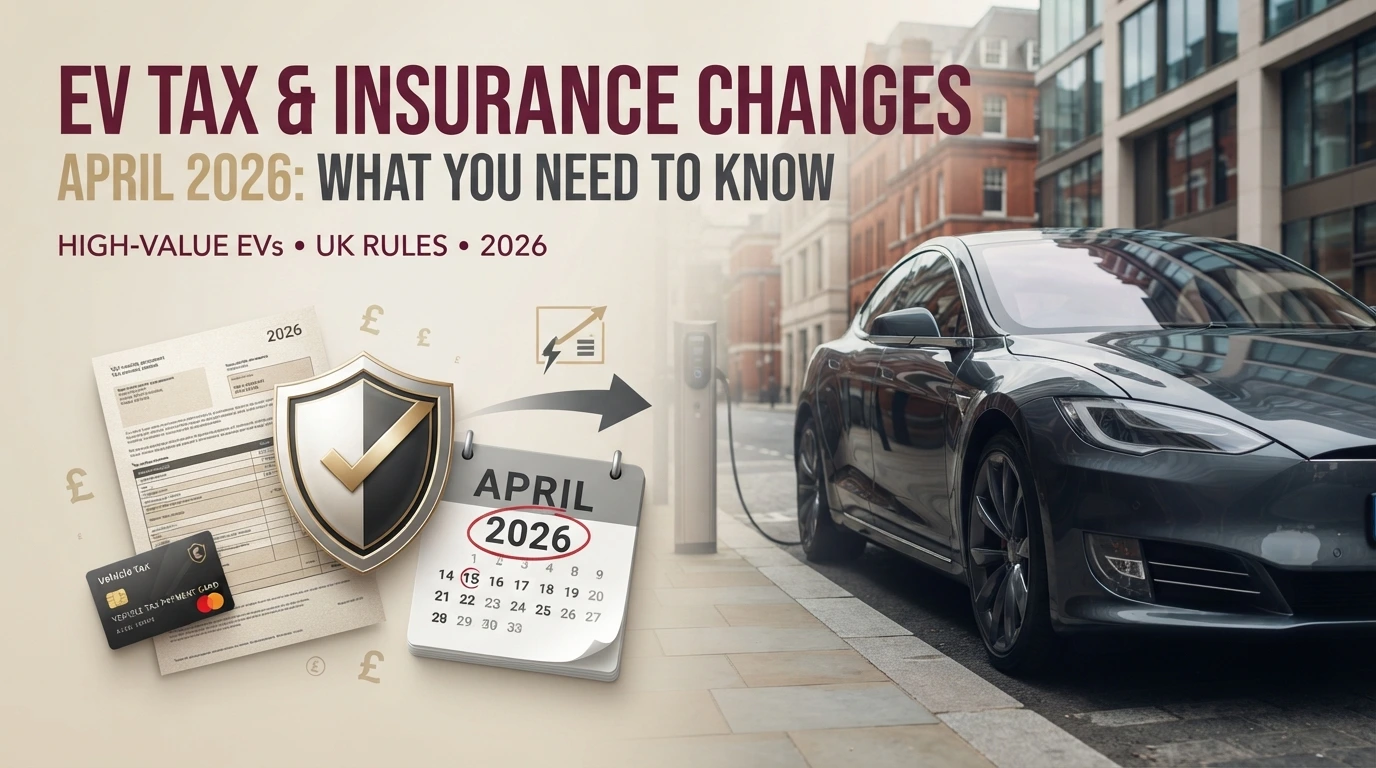
Answer: From April 2026, standard Vehicle Excise Duty rose from £195 to £200, the Expensive Car Supplement threshold for zero-emission cars rose from £40,000 to £50,000, and Benefit-in-Kind for electric company cars rose from 3% to 4%. The supplement threshold change is the one that matters most, since it clears many ordinary family-sized EVs of an extra five-year charge — but the tax figure alone doesn't tell you what your car costs to insure, and the two should be checked together.
A driver shopping for a new family EV this spring is going to hit two numbers that used to travel together and now don't. One is the tax bill, set by the Treasury and updated every April. The other is the insurance quote, set by an underwriter looking at an entirely different spreadsheet. For most of the past year, both numbers have been moving at the same time, and treating either one in isolation is how higher-value EV owners end up misjudging what their car actually costs to keep on the road.
This piece untangles the two. First the tax side, since three separate rule changes landed together this April and each one needs its own explanation. Then the insurance side, which most coverage of these changes skips entirely, even though it's often the bigger swing factor for anyone choosing between trim levels or deciding whether to renew with the same provider.
Each one is worth unpacking on its own before looking at how they interact with what you pay to insure the car.
The jump from £195 to £200 barely moves the needle for any individual owner, electric or otherwise. It's included here mainly for completeness, since it applies broadly across nearly every vehicle registered after 2017 regardless of fuel type. The number worth actually paying attention to sits in the next section.
Also known informally as the luxury car tax, the Expensive Car Supplement is a five-year surcharge added on top of standard VED for cars above a set list price. Electric vehicles were exempt from this charge for years, until that exemption ended in April 2025, bringing higher-value EVs into the same bracket that petrol and diesel cars had already been sitting in.
The change that actually matters for 2026 is the threshold itself moving from £40,000 to £50,000, specifically for zero-emission vehicles. That's not a minor adjustment. A large slice of ordinary, family-sized electric cars sit squarely in that £40,000-to-£50,000 band, models that were never marketed or thought of as luxury vehicles but got swept into the supplement anyway once EVs lost their exemption. Many of those same cars now clear the new, higher line entirely, and for their owners this represents a genuine saving rather than a technical footnote.
Company car drivers running an electric vehicle saw their BiK rate move from 3% to 4% this April. Compared with petrol and diesel company cars, where rates climb into the high thirties for the most polluting models, electric remains dramatically cheaper. Still, a full percentage point increase is real money over a tax year, and it's worth updating your own calculations rather than working from last year's payslip figures.
Almost every article covering these tax changes ends there, with a summary of the three figures above and a note about how much you'll save or pay. What gets left out is that the list price determining your tax bracket and the insured value determining your premium are pulling from the same underlying fact about your car, roughly what it's worth, even though two completely separate systems calculate them using different rules.
That connection matters in practice. A car sitting just above the new £50,000 line faces more than an extra £440 a year in tax. It's also likely sitting in a higher insurance group, carrying a higher agreed value with your insurer, and representing a larger sum at risk if it's ever written off. None of that shows up on a VED calculator, which is exactly why stopping at the tax headline gives you an incomplete picture of what a higher-value EV actually costs annually.
Consider a mid-size family EV offered in a standard trim priced at £43,000 and a range-topping trim at £53,000. On tax alone, the standard trim clears the new £50,000 threshold with room to spare, avoiding the Expensive Car Supplement entirely. The range-topping trim sits just above the line and remains liable, adding roughly £440 a year for five years.
Stop the comparison there and the two trims look like they're separated by the list price difference plus that £440 annual supplement. But the range-topping trim also carries a substantially larger battery, extra factory-fitted technology, and higher performance figures, all of which typically push it two or three insurance groups above the standard version. That gap alone can add several hundred pounds a year to the premium, entirely independent of the tax difference calculated above. A buyer comparing these two trims using tax figures alone would badly underestimate how much more the range-topping version actually costs to run each year.
Given how many figures have shifted in the same twelve-month window, it's worth running your specific numbers rather than assuming a policy or a tax estimate from last year still holds. The most reliable way to see how a particular trim level plays out overall is to run it through an insurance calculator and compare that alongside the current Expensive Car Supplement threshold, so you're weighing the full annual cost side by side rather than looking at either figure on its own.
If your EV was registered before April 2025, none of this year's Expensive Car Supplement adjustments apply retroactively in a way that adds a charge you weren't already facing. If your car was registered from April 2025 onward with a list price between £40,000 and £50,000, the threshold rising to £50,000 works in your favor from here forward, since a car that was previously caught by the supplement may now be clear of it entirely.
Either situation is a reasonable prompt to look at your insurance alongside your tax position rather than treating the two as unrelated line items. Insurance groups get reassessed, EV values have shifted meaningfully for certain models over the past year, and a policy renewed even twelve months ago may already be priced out of step with what's currently available for your specific car.
An auto insurance calculator lets you check your existing premium against what your car, postcode, and driving history would cost through other providers right now, rather than discovering the answer only when your renewal notice lands. This is worth doing this particular year given how much has shifted at once: tax thresholds, Benefit-in-Kind rates, and general EV insurance pricing have all moved since a lot of current policies were last set.
For higher-value EV owners specifically, where both the numbers involved and the potential savings scale up accordingly, spending a few minutes on this comparison tends to be worth considerably more than it would for a lower-value vehicle.
EV tax policy in the UK has been revised more than once over the past few years, and further changes are already being discussed for later in the decade, including a proposed distance-based charge for electric vehicles intended to help replace fuel duty revenue as the wider fleet shifts away from petrol and diesel. None of that is confirmed yet, but the pattern is clear enough: this is an area that keeps moving rather than settling into something fixed.
The practical takeaway for higher-value EV owners is to build an annual habit of checking both tax banding and insurance cover together, rather than carrying forward assumptions from whenever the car was first bought. Owners who consistently get the best deal tend to be the ones who recheck the current numbers every year, not the ones relying on figures that were accurate two or three renewals ago.
On balance, the April 2026 changes land as a net positive for a meaningful share of higher-value EV owners, driven mainly by the Expensive Car Supplement threshold rising to £50,000, even with the small increases to standard VED and company car BiK layered on top. None of that can be judged from the tax bill alone, since vehicle value, trim level, and insurance group all move together in ways that shape your true annual cost far more than VED does by itself.
Rather than treating the tax headline as the whole story, use this year's changes as a reason to check your specific vehicle's list price against the new threshold and run a fresh insurance comparison at the same time. Doing both together, not the tax figure on its own, is what actually tells you what your higher-value EV will cost to run in 2026.
That same habit of checking rather than assuming holds up well outside the world of vehicle tax and EV insurance specifically. Pet owners are dealing with a strikingly similar dynamic around their own rising premiums, and Pet Ins USA covers that same comparison-first approach for pet insurance shoppers. Households keeping an eye on wider financial trends alongside their insurance and tax planning might also find Oman Gold Rate Today's blog and Qatar Gold Rate Today useful, both tracking daily precious metal pricing for readers managing household finances across the Gulf region.
It rose from £40,000 to £50,000 for zero-emission vehicles. Electric cars priced below £50,000 aren't liable for the supplement, while those at or above it pay an additional charge on top of standard VED for five years.
Not directly, since the two are calculated by separate systems. But cars close to the threshold often share factors, like trim level and vehicle value, that also shape insurance group and premium, so it's worth checking both rather than assuming a tax saving carries over to your insurance bill.
From £195 to £200 a year, applying broadly across vehicles registered after 2017, including electric cars once they move past their first-year rate.
If it was registered before April 2025, it generally wasn't liable for the supplement in the first place. If it was registered from April 2025 with a list price between £40,000 and £50,000, the new £50,000 threshold is likely working in your favor now.
Yes. Different trims of the same model can land in noticeably different insurance groups even when both sit on the same side of the Expensive Car Supplement line, so comparing insurance figures alongside list price gives a far more complete cost picture.
It rose from 3% to 4% from April 2026. That remains well below the rate applied to petrol or diesel company cars, but it's a genuine increase worth factoring into this year's company car budgeting.


Your trusted UK partner for EV charger installation, electric vehicle conversion, and fleet solutions.