Car Insurance · Guide
Asking which company offers the best car insurance is a bit like asking for the best restaurant in a city — the honest answer depends on who's asking. A retiree with a paid-off sedan and decades of clean driving wants something completely different than a new driver just starting out.
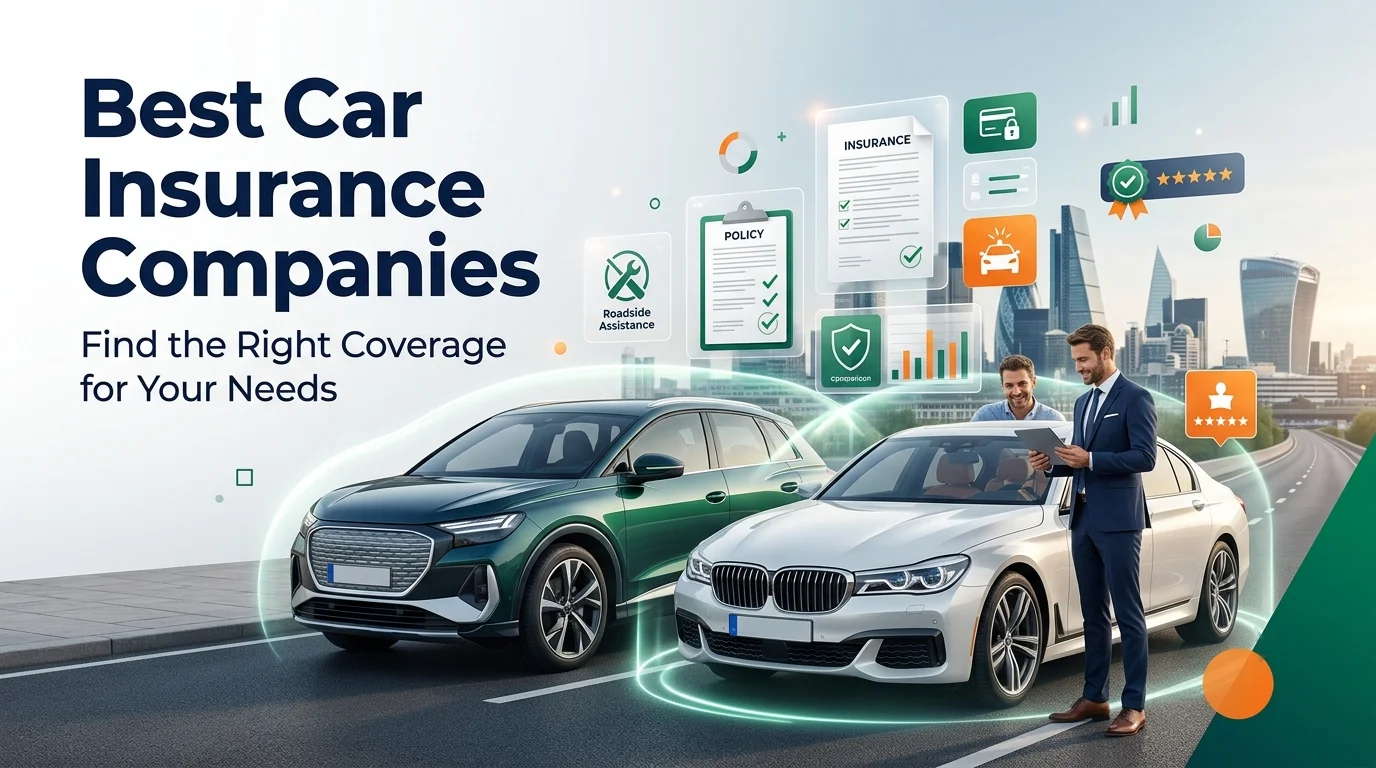
Answer: The best car insurance company depends on your situation — new driver, non-owner, EV owner or budget needs. Top insurers offer strong financial stability, good claims handling, flexible coverage, useful discounts and state availability. Compare total annual cost, not just monthly payments, and check options like no down payment car insurance, non-owner quotes and EV-specific battery and charging coverage.
Asking which company offers the best car insurance is a bit like asking for the best restaurant in a city — the honest answer depends on who's asking. A retiree with a paid-off sedan and decades of clean driving wants something completely different than a new driver just starting out, someone who doesn't own a car but still needs coverage, or an EV owner trying to find a policy that actually understands battery repair costs. Rather than chasing one universal "best" answer, it helps more to understand what genuinely separates strong insurers from mediocre ones, then match that to your own situation.
Here's what this guide covers: what actually makes an insurer worth considering, how no down payment car insurance works if you want coverage started without a big upfront cost, what new drivers should look for when hunting down the best cheap car insurance for new drivers, how a non-owner car insurance quote differs from a standard policy, and what separates the best electric car insurance providers from a generic policy with an EV logo stuck on it.
Before comparing specific companies, it's worth pinning down what "best" should even mean here, since price on its own is a pretty misleading measure.
Financial stability is the one people skip past too quickly. An insurer's ability to actually pay out claims, especially during a widespread event like a hurricane or a major hailstorm, comes down to its underlying financial strength. Independent rating agencies track this specifically, and it's worth a quick check before committing to anyone.
Claims handling reputation matters just as much, arguably more, because a policy is only as good as the experience you get when you actually need to use it. Insurers known for fast, fair claims processing tend to score consistently well on independent customer satisfaction surveys, while cheaper options sometimes cut corners here in ways that only become obvious after something's already gone wrong.
Coverage flexibility is another piece worth checking. The strongest insurers usually offer a real range of coverage levels and add-ons, letting you shape a policy around your situation instead of forcing you into something rigid and one-size-fits-all. Digital tools have become a genuine differentiator too — mobile apps for filing claims, tracking repairs, and managing policy details, particularly for younger drivers who expect a smooth app experience alongside a competitive price.
Discounts are worth digging into as well. Multi-policy bundling, safe-driver programs, good-student discounts, and telematics-based options can all shift your actual out-of-pocket cost well below the sticker price on the quote. And don't skip checking availability in your own state — some strong national insurers simply don't operate everywhere, and even among those that do, pricing and coverage can vary a lot state to state due to differing insurance regulations.
For a lot of drivers, especially anyone managing a tight monthly budget, paying a large upfront amount just to get coverage started feels like an unnecessary hurdle. No down payment car insurance addresses exactly that, though it's worth understanding what it actually means before assuming it's available everywhere.
It isn't truly "free" coverage — that's the first thing to clear up. No down payment simply means your first payment gets folded into your monthly installments instead of requiring a lump sum before your policy even starts. You'll still pay the full annual premium eventually, just spread differently.
Availability varies quite a bit by insurer and by state. Not every company offers this everywhere, and some restrict it to drivers with a clean record or a specific credit profile, since a larger initial payment is one way insurers reduce their own risk of someone canceling early. Monthly payments also tend to run a bit higher on these plans, since the insurer isn't collecting that lump sum upfront and is instead spreading the cost across whatever installments remain.
The number that actually matters is the total annual cost, not just what shows up on the monthly bill. A policy that looks cheaper month to month purely because it skips a down payment might not actually save you anything over a full year compared to a policy with a modest deposit and a lower ongoing installment.
If a large upfront cost is genuinely what's keeping you from getting insured, no down payment options can be a legitimate bridge — just run the full-year math first rather than assuming it's automatically the better deal.
New drivers consistently pay more than experienced ones, and that's tied directly to the higher statistical claims rate among less experienced drivers as a group, not any judgment about individual skill. Still, "expensive" doesn't have to mean "unaffordable," and there are a few consistent strategies that genuinely help.
Non-owner car insurance is one of the more misunderstood categories in the whole auto insurance world, mostly because people assume insurance only matters if you actually own a car. A non-owner car insurance quote is built specifically for people who drive regularly but don't own a vehicle themselves.
This tends to come up in a few common situations: someone who frequently rents cars, someone who regularly borrows a friend's or family member's vehicle, or someone trying to avoid a lapse in coverage history, which many insurers weigh when pricing future policies, even though they don't currently own a car.
It typically covers liability only. Non-owner policies generally pay out for damage or injury you cause to others while driving a borrowed or rented vehicle, but usually won't cover damage to the vehicle itself, since that's typically on the owner's own policy. It's also a useful way to maintain continuous coverage — for someone who's sold a car and doesn't plan to buy another right away, a non-owner policy prevents a gap that many insurers factor into future pricing.
Some states require proof of financial responsibility after certain licensing situations, sometimes tied to a prior violation, and a non-owner policy can satisfy that requirement even without owning anything. Cost tends to run lower than a standard policy too, since non-owner coverage typically skips comprehensive and collision protection tied to a specific vehicle, though pricing still shifts based on driving history and which insurer you go with.
If you find yourself regularly behind the wheel of cars you don't own, getting a non-owner car insurance quote is worth doing even if it feels like an unusual category — the consequences of a coverage gap down the line can outweigh the fairly modest ongoing cost.
As electric vehicles have become more common, insurance products genuinely built around EV-specific risk have matured a lot, and the best electric car insurance options now look meaningfully different from a standard policy with a green badge stuck on it.
Battery-specific coverage terms are the first thing worth checking, since the battery pack is often the single most expensive component in an EV. Strong policies spell out clearly what's covered in the event of battery damage, including whether gradual capacity loss is included or excluded. Access to an EV-certified repair network matters just as much — a policy is only as useful as the repair experience behind it, and insurers with a genuinely broad network of EV-certified body shops tend to produce faster, smoother claims handling than one relying on a thin, spread-out network.
Charging equipment and cable coverage is easy to overlook but worth confirming, since home charging units represent a real investment and the best EV policies typically include this as standard rather than an easily missed add-on. Some strong EV insurers go further and include public charging liability protection, covering accidental damage to public charging infrastructure — a scenario a standard auto policy might not anticipate at all. A handful of insurers now also offer telematics options calibrated specifically for EV driving patterns, which can differ meaningfully from combustion vehicle driving in terms of acceleration and regenerative braking use.
If you're specifically comparing electric vehicle insurance options and want a deeper breakdown of ownership costs beyond just the insurance line item — including charging costs, depreciation, and maintenance — evehicleuk.com offers detailed guides aimed at helping EV owners understand the full picture of total cost of ownership.
Regardless of which category you fall into — new driver, non-owner, EV owner, or someone just trying to avoid a big upfront cost — the process of comparing insurers effectively stays pretty much the same.
The same habits that help you find the best car insurance company for your situation — comparing multiple quotes, reading exclusions carefully, matching coverage to your actual needs instead of a generic default — apply just as well to other insurance you might be managing at the same time. If you're reviewing household coverage more broadly this year, sites like petinsusa.com walk through similar comparison principles for pet insurance, which can be a useful parallel read while doing a wider insurance review.
There's no single universal answer to which company counts as the best car insurance provider, since the right fit depends heavily on your specific situation — whether that's needing no down payment car insurance to get started without a big upfront cost, being a new driver hunting for genuinely competitive rates, needing a non-owner policy despite not owning a car, or looking specifically for the best electric car insurance built around EV-specific risk. The reliable approach stays the same across every one of these: compare several quotes with identical coverage levels, read the exclusions carefully, check independent claims-handling reputation, and revisit your policy every renewal rather than assuming last year's rate still holds.
Strong financial stability, a solid claims-handling reputation, flexible coverage options, and genuine discount availability all matter more over time than simply having the lowest quote on the page.
Not necessarily. It spreads your first payment into your ongoing installments rather than requiring a lump sum upfront, but monthly payments are often slightly higher, so it's worth comparing total annual cost rather than just the monthly figure.
Look into good student discounts, consider staying on a parent's policy where eligible, ask about telematics-based programs that reward safe driving, and compare at least four or five quotes, since new-driver pricing varies more between insurers than it does for experienced drivers.
It's worth getting one if you regularly borrow or rent vehicles, since non-owner coverage typically provides liability protection and helps you maintain continuous insurance history, which can affect future pricing if you buy a car later.
It generally covers liability for damage or injury you cause to others while driving a borrowed or rented vehicle, but usually doesn't cover damage to the vehicle itself, since that's typically covered under the owner's own policy.
Look for clear battery damage coverage terms, access to a genuine network of EV-certified repair shops, charging equipment and cable coverage, and public charging liability protection, rather than a standard policy with minimal EV-specific adjustments.
At least once a year at renewal, since your driving record, life circumstances, and the broader insurance market all shift over time, meaning a policy that was competitive last year may no longer be the best available option today.

Your trusted UK partner for EV charger installation, electric vehicle conversion, and fleet solutions.